Tag: american

  • Minneapolis Institute of Art Floor 3 Part 1

    Minneapolis Institute of Art Floor 3 Part 1

    William Edmondson

    Ram“, 1938-1942

    Limestone.

    _MG_4107 (2)

    Jean-Baptiste Auguste Clesinger

    “Bacchante and Satyr”, 1869

    Marble

    This slideshow requires JavaScript.

    Antoine-Louis Barye

    “Theseus Slaying the Centaur Bianor” ,1850 (Modeled cast, 1891)

    Bronze, Caster: Ferdinand Barbedienne

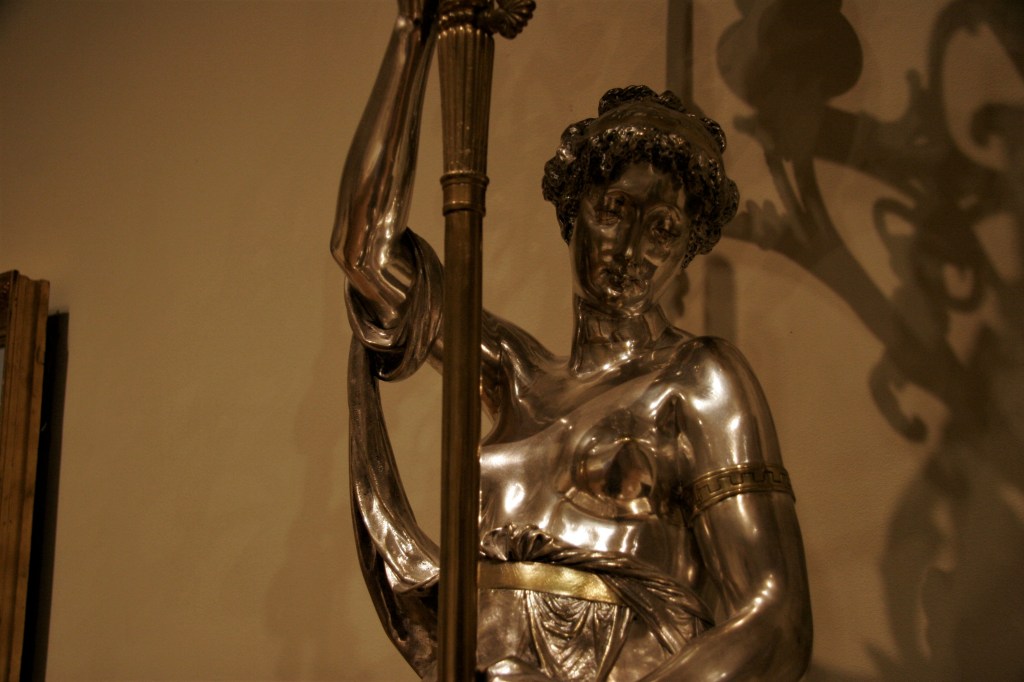
    Albert-Ernest Carrier-Belleuse

    “Pair of Torches”, 1862

    Bronze, Gilt, Silver, Black Onyx, Red Marble

    Henry Bannarn

    “Cleota Collins”, 1932

    Plaster, Pigment

    _MG_4053 (2)

    Jean Hanau

    “Pueblo Indian Group”, 1928

    Oil on Canvas

    Harry Jackson

    “Stampede”, 1958-1959

    Bronze, Wyoming Jade Base

    Wenzel Friedrich

    “Platform Rocking Chair and Stool”, 1880-1890

    Horn, Ivory and Glass with Ocelot Upholstery

    Herman Atkins Macneil

    “A Chief of the Maltnomah Tribe”, 1905

    Bronze

    “Writing Desk”, 1760

    Wood, Paint, Gilt, Gilt Bronze

    _MG_4004 (2)_MG_4003 (2)_MG_3999

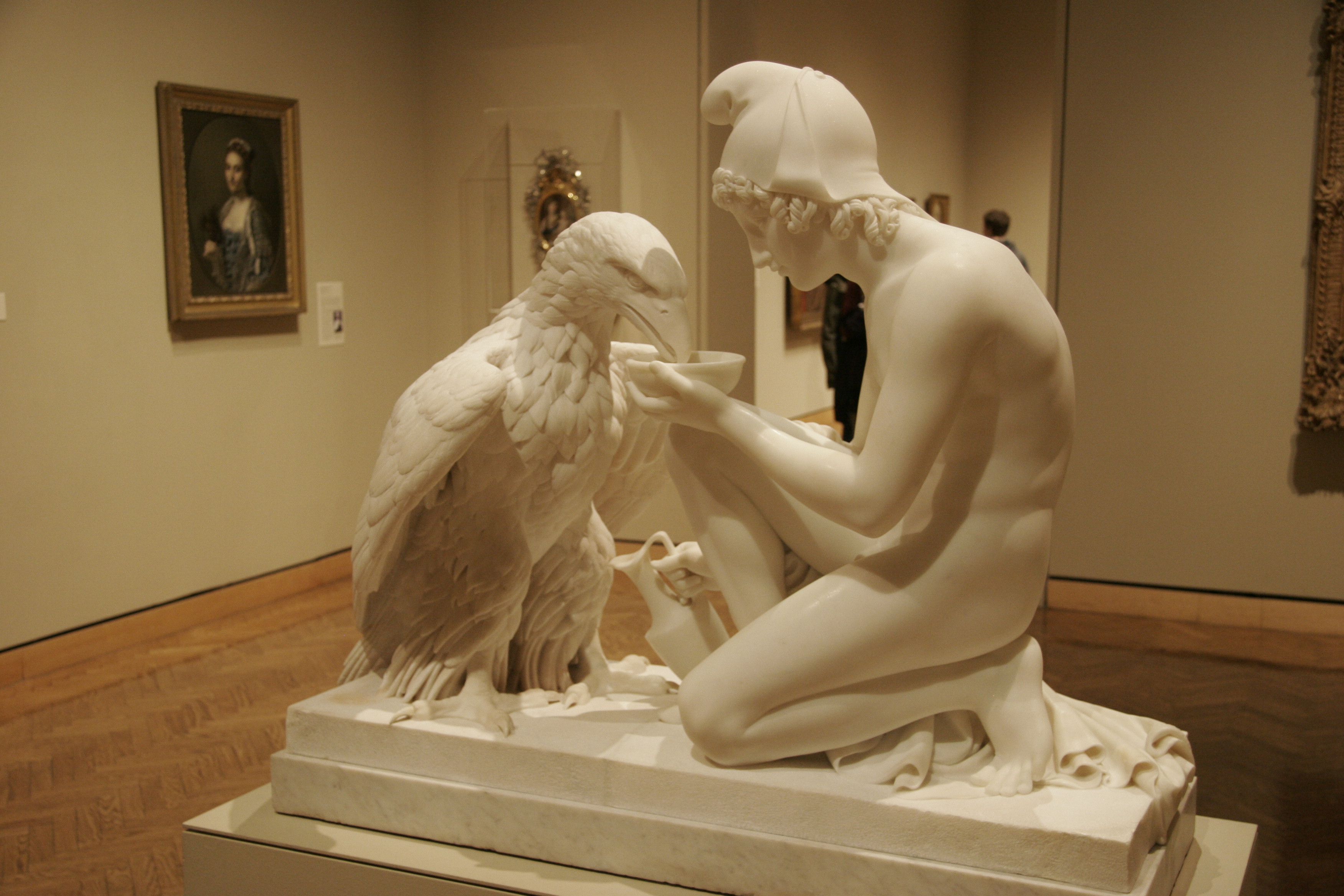
    Bertel Thorvaldsen

    “Ganymede and the Eagle”, 1817-1829

    Marble

    _MG_4009 (2)

    Nicolas de Largilliere

    “Portrait of Catherine Coustard, Marquise of Castelnau, Wife of Charles Leonor Aubry with her Son Leonor”, 1699

    Oil on Canvas

    This slideshow requires JavaScript.

    After Gaspard Marcy

    “Boris Abducting Orithyia”, 1700

    Bronze (Reduction cast)

    This slideshow requires JavaScript.

    Joseph Venache

    “The Borghese Gladiator”, 1680-1685

    Bronze

     _MG_3997

    Pierre-Phillippe Thomire

    “Clock with Vestals”, 1790

    Bronze, Gilt Bronze, enameled dial, Marble

    Fernandi Tacca

    “Satyr and Nymph”, 17th century

    Bronze

    Unidentified Designers and Cartoonists

    “Waiting the Chase”, 1650

    Wool, Silk, Tapestry Weave
    _MG_3947 (2)

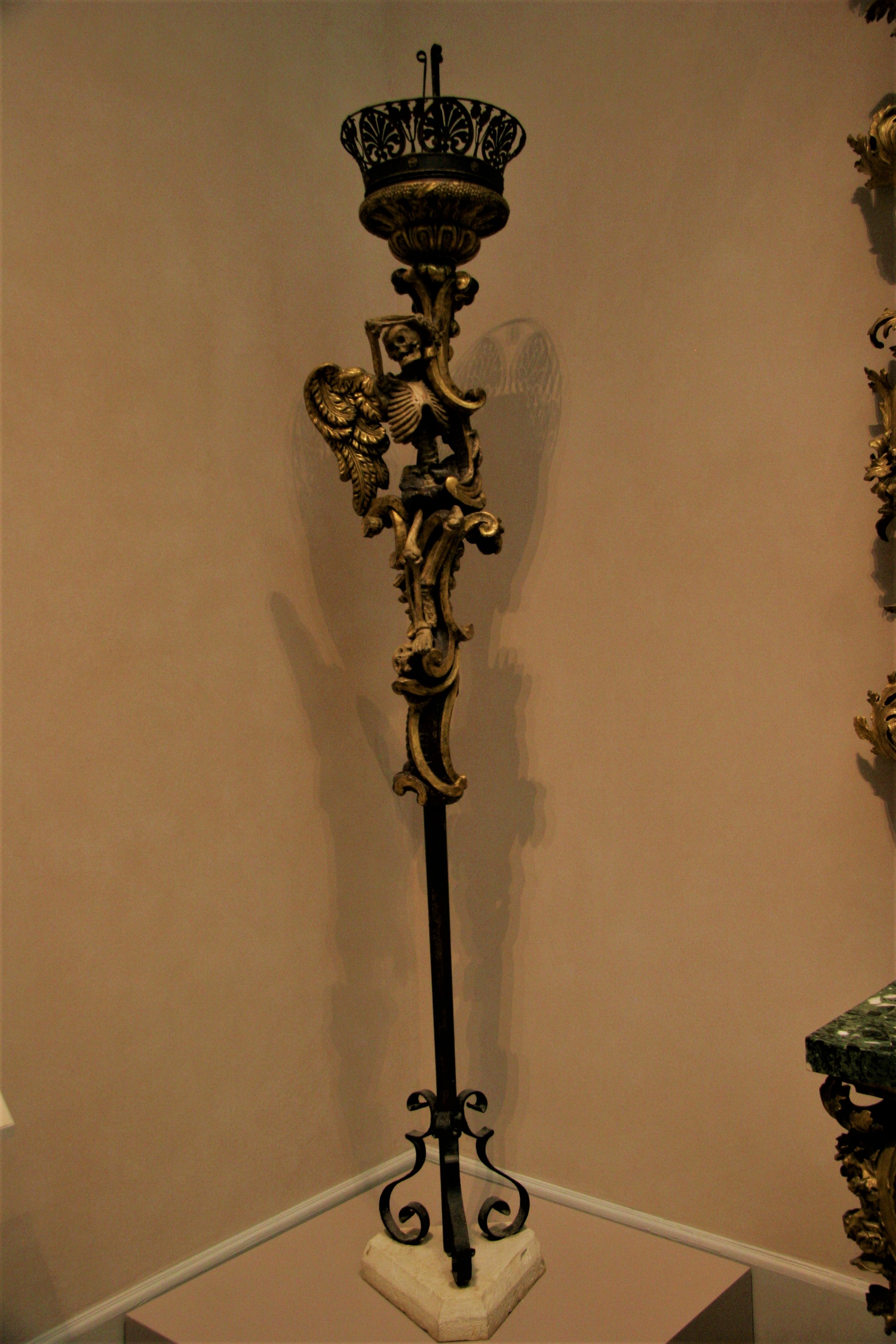
    “Funeral Torch”, 1620

    Gilded and Painted wood and wrought iron

    Attributed to Jose Montes de Oca

    “Saint Benedict of Palermo”, 1734

    Polychrome and gilt wood, Glass

    This slideshow requires JavaScript.

    Aaron Spangler

    Songbird”, 2006

    Carved bass wood, black gesso and graphite

    Hans Schaufelein

    “Roundel Set”, 1500

    Stained Glass, Lead


  • Analysis of Narrative of the Life of Fredrick Douglass, an American Slave and Incidents of a Slave Girl by Linda Brent

    Warning this post has terminology in it that maybe offensive to the reader.  I have recently realized myself that, there is one word in particular that tears me up inside just to hear it spoken in common tongue.  It was after reading these two stories that I realized how dirty and disgusting one word can make you feel.

    I was assigned Narrative of the Life of Fredrick Douglass, an American Slave and Incidents of a Slave Girl.  Through these two Narratives I have learned a lot about the conditions and trials of the African American and were forced to work for little or nothing.  To me these stories were heart wrenching and at the same time give me hope in the chaotic times in which we live today.

    Mr. Fredrick Douglass and Ms. Linda Brent, I use Mr. and Ms. out of respect for these two courageous souls and their trials, were born into slavery and raised by their grandmothers.  They also barely knew their mothers, but for different reasons.  Mr. Douglass’s mother was sold to another slave holder when he an infant.  Whereas, Ms. Brent’s mother died when she was six years old.   Mr. Douglass did not know who his father was.  There were rumors that his master was his father, yet no one knew for sure.  Ms. Brent knew she was mulatttoe, because her grandmother had “Anglo-Saxon” blood in her. These were the times that were horrible for the black man and even worse for the black women.  Yes, the men were whipped and beaten, but these wounds were only physical.  The women on the other hand were raped, molested and were thought to be less valuable then the men, who worked in the fields.  Ms. Brent was lucky in that respect; she was not raped.  Although, she was constantly harassed and advanced upon by her second owner a Dr. Flint, when she was in her teens.

    Ms. Brent knew her father he was a free black man, who was a skilled trades man and made money of his own, which was unusual.  When Mr. Douglass started learning calk in the ship yard, had to give all the money he earned at first to Master Hugh, in Baltimore.   Most and was trying to earn enough to buy his families freedom, but with no such luck.  For the better part of her childhood she did not know she was a slave.  She was taught how to read and write by her first mistress from age six; until she died when Ms. Brent was twelve.  This was when she first realized her life was not really her own and was sent to her mistress’s sisters, whose husband was Dr. Flint.  Mr. Douglass on the other hand did not have the luxury of learning how to read and write till he was sent to Baltimore.  Then when his new mistress, who had been from the north, tried to teach him was stopped by her husband Mr. Auld.  Mr. Auld, who fore bade her from instructing him any further said; “A nigger should know nothing but to obey his master-to do as he is told to do.” To summarize the rest that if you educated a person that they would be miserable and may rise up against his slave holder.  This did not stop Mr. Douglass though, he came up with an ingenious plan, I think, and tricked the kids on the street to teach him how to read and write.  He did this by telling him he already knew how to read and write, then when he did not get it write they would show him, not knowing that they were teaching him.

    Mr. Douglass was raised in Maryland where was thought that they treated their slaves better than below the Mason-Dixon line.  Through my reading these narrative, I saw very little difference between the two myself.  Ms. Brent Being from South Carolina saw many of the same things going on, as Mr. Douglass.  Although, I remember a particular scene in which she described a man being strung up by his chest and having hot lard dripped on him for disobeying his slave holder.  I read this and cringed at the thought.  How could people be so cruel to another?  Later we find out that Ms. Brent passed on her knowledge to an older slave who wanted to know how to read the bible, so he could be closer to God.

    Another thing they both witnessed in their lives is when their slave holders found god they, became even more cruel to their slave.  The slave holders could find justifications for their treatment of slaves in the bible and strengthened by their religious leaders.  Mr. Douglass said: “my master attended a Methodist camp meeting held by the Bay-side, Talbot county and experienced religion…” and continued “It neither made him to be humane to his slaves, nor to emancipate them.”  Which he hoped for so dearly it would.   Ms. Brent described a similar experience with Dr. Flint.  When he found religion is when he stared to be crueler to her and hit her on a couple other occasions.  This is something he did not do but once before.

    Dr. Flint did not rape Ms. Brent, but this did not stop his unwanted advances toward her.  Not only did she not want these advances, this also made his wife jealous of her and whenever Mrs. Flint could she would try and make Ms. Brent’s life miserable.  Dr. Flint was obsessed with Ms. Brent to the point where she would try anything to make him not want to have anything to do with her.  To this point she ended up having two children with a man she didn’t love, but whom treated her decent.  These attempts did not stop his advances to the contrary, these two children gave him leverage over her.   In order to save her children, she planned her escape hoping that if she ran, he would sell them.  Now, I know this sound bad, but the father of the children was ready to purchase them from Dr. Flint.  Though it took quite a while, but eventually Dr. Flint did sell them to a slave trader who unbeknownst to him was sympathetic to Ms. Brent and her family.  Dr. Flint did not want to sell them, but because of his obsession with her that he barrowed $500 with interest to go find her in New York where he thought she was.  It was this that caused him to be low on money, so he had to sell them.  The person he borrowed the money from was harboring Ms. Brent in the attic of her home.  After reading about this I laughed so hard, for she had finally gotten the better of him in some way.

    Mr. Douglass Had tried to run a way about three times before he finally made it to New York.  There he had no friends and did not know who to trust.  This was until he met a man by the name of Mr. David Ruggles who helped him to secure passage to New Bedford.  Before he left for New Bedford he met a woman who would be his wife Anna.  They traveled together to their new home.  For Ms. Brent her journey to freedom took a long time.  She did not try to escape, but once and it was a long journey.  Hiding at one friends home, then she went to another’s hiding in her attic for quite a while.  The next place she hid was in the crawl space above her grandmothers shed.  In all these situations she had multiple close calls with Dr. Flint.  Eventually she made to Philadelphia and then New York and she was a free woman.


  • Hope

    This was written before the presidential primaries.  Now people can see how wrong I was.

    was at school today early for class like always.  I see a person I have talked to a few times before.  She is an older African American woman who is sweet as can be.  We were talking about what is going on in the world she is worried about what would happen if Trump or someone like him got into office. I showed her a video of Bernie Sanders Bringing a young Muslim student up on stage gave her a hug and talked about what his family went through during WWII.   It seemed to quell her fears a little.  She said there are still so many other people out there that hate and fear monger.  I told her “There are always going to be people like that out there. We won’t be able to stop that but what we can do is keep those numbers as small as we can.  That way they have no more power.”  She asked me” Do you think we change things?”  I told “Yes, the people turning against each other are the ones getting rich, while the rest of us are struggling.  They are afraid of what will happen if we as a people unite.  They will either have a violent revolution or a peaceful one.  A violent one would not end well for them and they know it. There are a lot more of us than there are of them.  I feel they will opt for the peaceful one.” and I gave her a hug.  We need to them that we are better than they think we are.  To them we are just pawns on a chess board easily sacrificed for their greed and contempt for us.

    Now more than ever we must stand together every religion or lack thereof and race.  To let these people know we are not just going to stand by and give in to their fear and hatred.  We are stronger when we stand together.  There can be no freedom without equality.  There can be no peace without freedom.  Let us stand and Yell “NO MORE” to the hate and fear they only divide us.  Say “NO MORE” to putting paper (money) before people. Let us give our children hope for their future, for they are our legacy.  Let the children know we care by letting go of the old ways and start to build a new world they can be proud of.  Keep hope alive and use your voice for that is the most effective weapon we must beat those who seek to divide us.

    Peace be with you all